
Adult Product Export Checklist: Documents, Labeling, and Customs Risks to Review
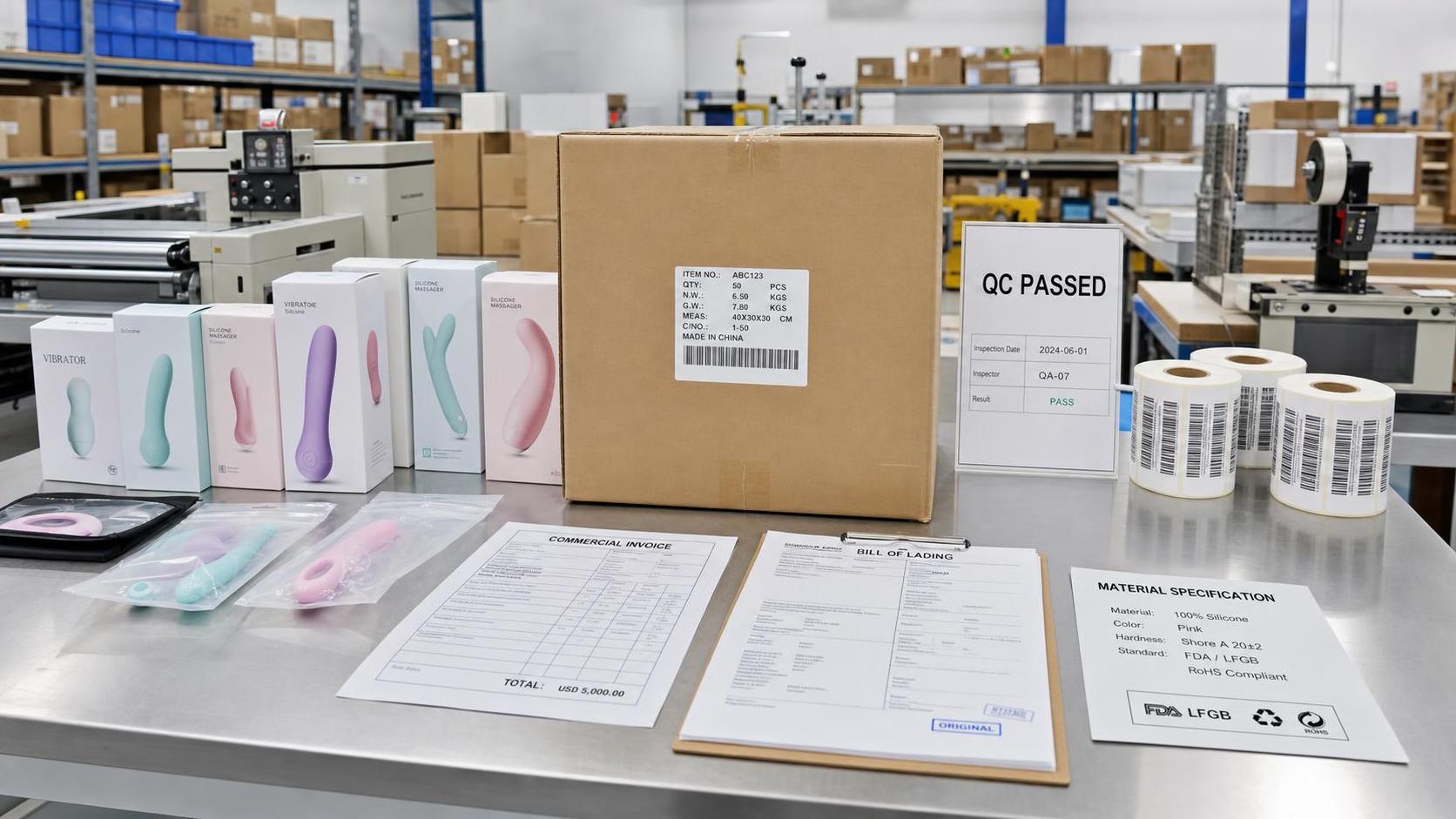
What should be checked before an adult product export order is confirmed?
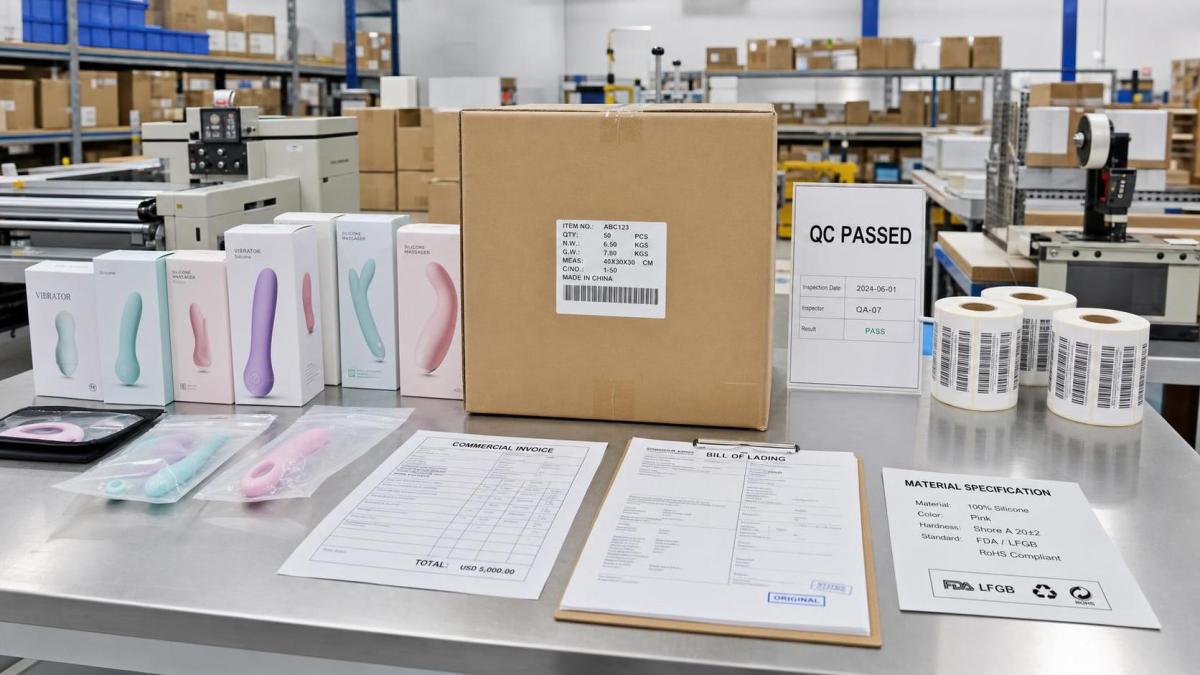
Successful adult product export usually fails or succeeds before production ends. The real checkpoint is not the shipping date. It is the review stage before payment, labeling approval, and document preparation.
For intimate toys, realistic dolls, inflatable products, and accessories, customs risk often comes from small details. A missing material note, vague product name, or inconsistent carton mark can trigger extra inspection.
In practice, the safest approach is to review the file set, the product description, and the market destination together. That matters even more when private labeling, design changes, or exclusive molds are involved.
An experienced supplier should already support this process. That usually includes packing lists, commercial invoices, customs clearance files, testing reports when needed, and coordinated export handling for high-volume shipments.
A modern factory with in-house design, mold development, injection molding, hand-finishing, and quality control can often reduce risk earlier. The reason is simple. Product data, packaging details, and export records stay more consistent.
Which documents are usually non-negotiable for adult product export?
This question appears simple, but it often causes the biggest delays. Different countries ask for different supporting papers, yet several documents are almost always expected in adult product export transactions.
At minimum, review whether the shipment file includes a commercial invoice, packing list, bill of lading or airway bill, and any origin-related document required by the destination market.
For realistic dolls, TPE items, silicone products, and inflatable goods, material-related records may also be important. Some buyers need test reports, declaration sheets, or safety documentation for platform listing and customs review.
It is also worth checking whether the product names are commercially usable. Overly explicit wording, inaccurate translations, or mismatched descriptions between invoice and carton label can increase customs attention.
A practical review table helps clarify what to request before shipment:
If a supplier says the paperwork can be arranged later, that is not always reassuring. In adult product export, late document correction is often more expensive than early review.
How careful does labeling need to be for dolls, toys, and accessories?
Labeling deserves more attention than many first-time importers expect. Customs officers, marketplaces, freight forwarders, and local compliance teams may all read different parts of the same packaging set.
The outer carton, retail box, barcode label, and shipping mark should not contradict one another. A common problem is that private label packaging says one thing while the export invoice says another.
For adult product export, product naming should balance accuracy and discretion. It must still describe the goods truthfully, but it should avoid careless wording that creates unnecessary inspection sensitivity.
Material labeling also matters. Silicone, TPE, PVC, ABS, textile parts, batteries, adhesives, and lubricants can each affect how goods are reviewed, packed, or declared. Battery-powered accessories need extra transport attention.
Need-to-check labeling points usually include:
- Retail and shipping names match the invoice language closely enough.
- Country of origin is shown where required.
- Material and care notes fit the actual item construction.
- Warning labels are added when batteries or specific use limits apply.
- Private logo files, barcodes, and carton marks are approved before mass packing.
In real shipments, label inconsistency is one of the easiest problems to avoid. It only requires earlier coordination between packaging, production, and export documentation.
Where do customs risks usually appear, and which ones cost the most?
The highest customs risk does not always come from the product category alone. More often, it comes from a mismatch between what the goods are, how they are labeled, and how they are declared.
For example, realistic dolls may attract closer review because of size, material composition, and packaging profile. Inflatable products may raise questions about material type or accessory contents. Small accessories can still be flagged if declared too vaguely.
Some risks affect cost directly. Reclassification can increase duty. Inspection delays can add storage fees. Missing reports may interrupt marketplace listing after arrival, which turns a logistics issue into a sales issue.
A useful way to judge customs exposure is to separate routine risk from avoidable risk:
The costly part is rarely the paper itself. It is the chain reaction. Delayed launch, extra storage, relabeling, and missed selling windows often cost more than the factory price difference.
How can supplier readiness be judged beyond sample quality?
Sample quality is important, but it does not prove export readiness. Adult product export depends on process discipline, especially when orders involve custom logos, packaging updates, or repeated regional shipments.
A stronger signal is whether the supplier can connect design, production, quality control, and logistics without gaps. That matters for silicone dolls, TPE dolls, inflatable models, and mixed accessory orders.
Factories with standardized workflows usually handle this better. If mold development, injection processes, surface finishing, inspection, and export packing are coordinated internally, documents tend to be more reliable.
It also helps when the supplier has experience across North America, Europe, Southeast Asia, the Middle East, and South America. Export familiarity does not remove risk, but it improves response speed when requirements differ by market.
When evaluating readiness, ask for evidence in operational terms:
- Can the supplier provide past document formats for similar destinations?
- Are testing reports linked clearly to actual product models or materials?
- Is there a controlled approval flow for artwork, carton marks, and packing lists?
- Can high-volume orders be shipped consistently without changing core specs?
- Does the team support both standard wholesale and custom development work?
These points reveal more than a polished brochure. They show whether the supplier can support repeatable adult product export, not just one successful shipment.
What often gets missed when estimating total landed cost?
A low unit price can hide a weak export setup. In adult product export, the landed cost is shaped by packaging density, product weight, declaration accuracy, inspection probability, and the speed of corrective action.
Large silicone dolls may raise freight cost because of weight and volume. TPE models can create different handling considerations. Heavy-duty inflatable products may ship efficiently, but accessory sets can complicate packing structure.
Another overlooked factor is rework cost. If retail boxes, stickers, or invoice descriptions need revision after production, the cost is not only printing. It can delay booking, create warehouse labor, and affect customs timing.
A more realistic landed-cost review should cover:
- Freight mode and dimensional weight impact.
- Import duty exposure based on product classification.
- Testing, declaration, and relabeling cost if needed.
- Storage, inspection, or demurrage risk during customs review.
- Marketplace listing delays caused by incomplete compliance files.
This is why document readiness should be treated as a cost-control issue, not only a compliance issue.
So what is the most practical checklist before placing the next order?
The best checklist is short enough to use and detailed enough to catch mistakes. It should cover product identity, paperwork, labeling, transport details, and destination-specific concerns in one review cycle.
For adult product export, that means confirming the final product name, material composition, packaging text, shipping marks, invoice description, HS code approach, and any testing support needed for customs or listings.
It is also smart to confirm whether the order is standard stock, private label, modified design, or exclusive mold work. Each option changes lead time, approval steps, and documentation pressure.
A reliable supplier should be able to align manufacturing and export support in the same workflow. That includes stable capacity, controlled QC, and practical assistance with packing lists, customs files, and report preparation.
Before the next shipment moves, review the order as if customs will compare every file against the carton in front of them. That mindset usually prevents the most expensive mistakes and leads to more predictable adult product export decisions.
Related Posts
- ▶ How to Evaluate Silicone Dolls: Texture, Durability, Weight, and Maintenance
- ▶ What Types of Adult Products Are Common in Global Wholesale Channels?
- ▶ Adult Product Export Checklist: Documents, Labeling, and Customs Risks to Review
- ▶ Adult Product Compliance Explained: Key Import and Export Requirements by Market
- ▶ Realistic Dolls Buying Guide: Materials, Body Types, and Key Details to Compare
- ▶ Inflatable Dolls vs Silicone Dolls: Which Option Fits Different Buyer Needs?